Sadogashima, Part 1: The Geography of Sado
Sadogashima is an island located off and governed by Niigata Prefecture – the shortest gap between it and Honshu, the main island of the Japanese archipelago, is 20 miles and a ferry from Niigata port to Sado takes about an hour. The island’s name in kanji is 佐渡島, and while 佐 is most commonly used today in place names, 渡 means ‘to cross.’ Outside the four islands that comprise the Japanese mainland, Sado is Japan’s second largest island behind Okinawa, at about 330 square miles.
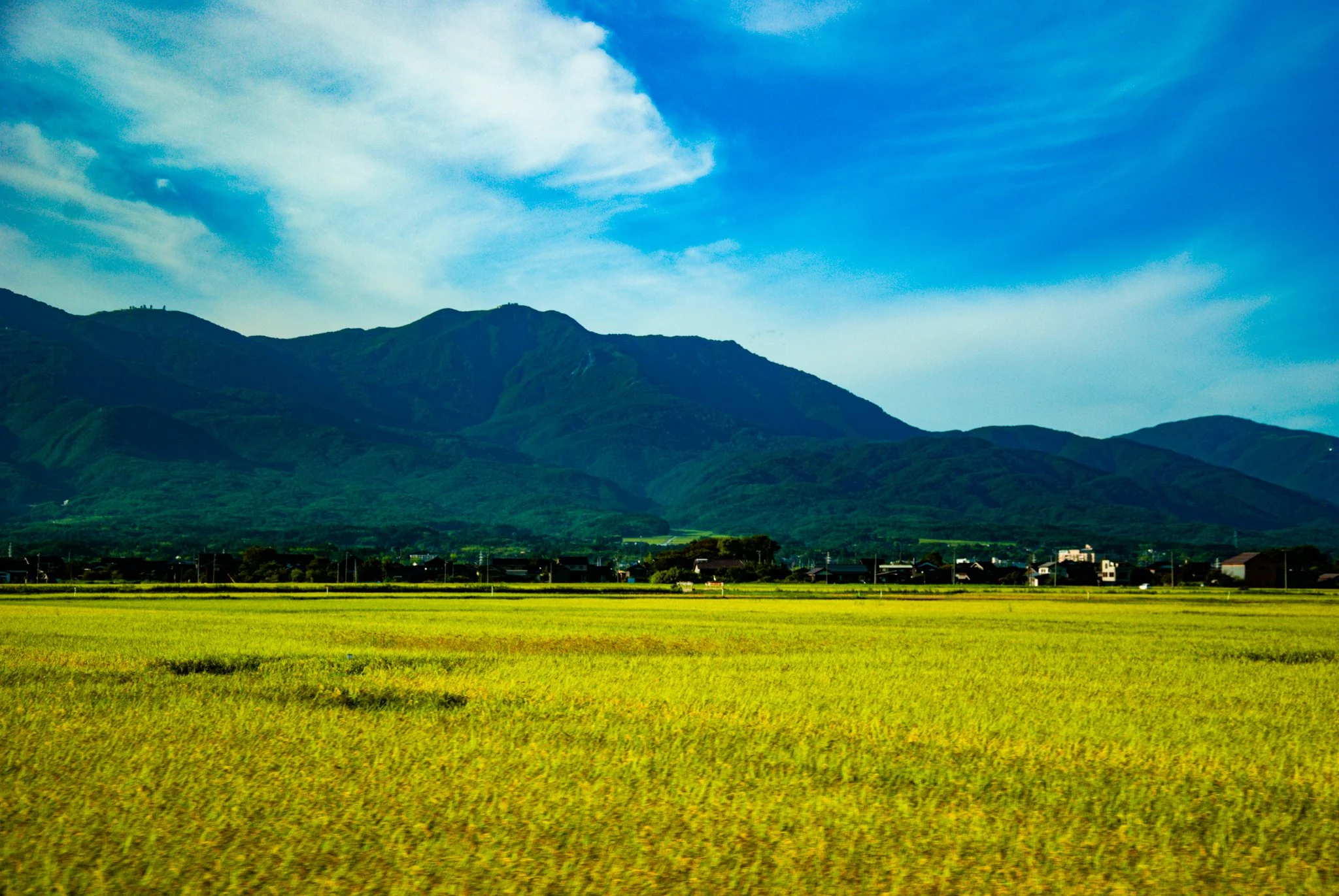
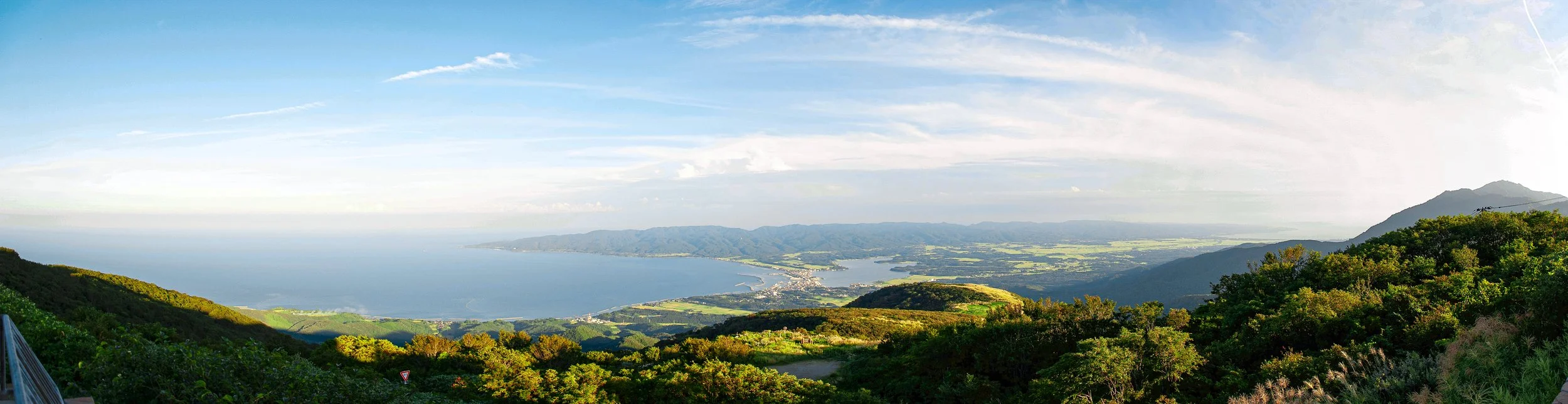
Sado is distinctively divided into two mountain ranges in the north and south, with flatlands in between where most of the population is concentrated. Rice fields spread along the centre of the island, so that a drive from Hidaka neighbourhood in the south to Sawata up north takes you directly through farmland with views stretching far in either direction, interrupted only by Sado’s large main hospital. The northern mountain range is higher overall and includes both Mt Kinpaku, its highest point at nearly 1,200 metres above sea level, and Mt Donden, on top of which sits a beautiful lodge and observation deck. Lake Kamo is located on the eastern side of the island’s central plain, and is separated from the ocean by nothing more than a section of Ryotsu town so skinny that one can walk from the lakeside to the oceanside in under five minutes. The lake was originally freshwater but was opened to the sea during the Meiji Period, turning the water brackish but still allowing for a thriving oyster fishing industry. I was particularly struck by how deeply blue the lake looks in summertime.
Views from Mount Donden. Visible below is Lake Kamo, with Ryotsu town on its left
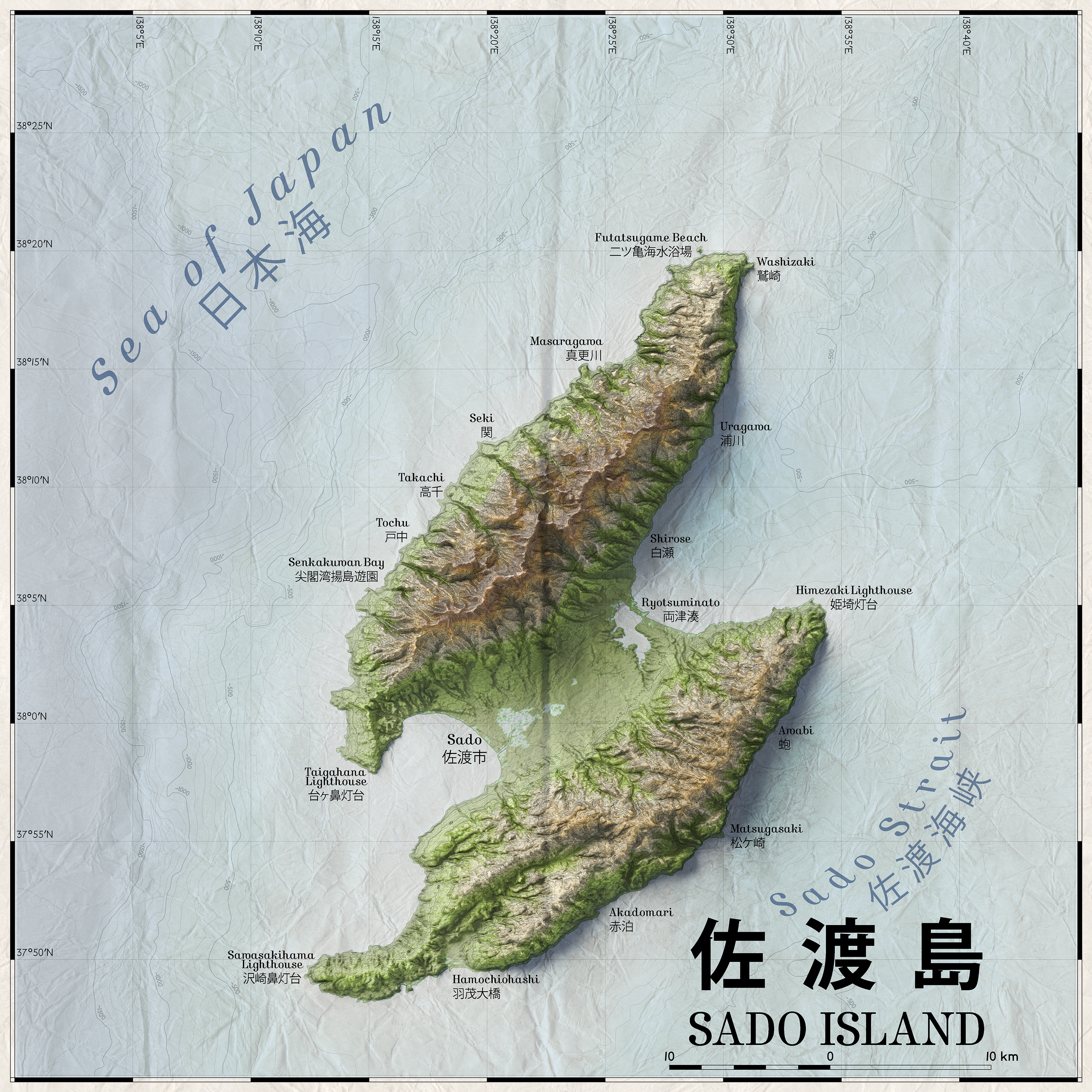
Map of Sadogashima
Credit: Wikipedia
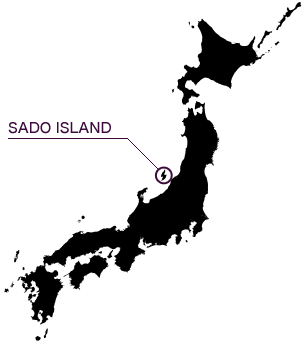
Where Sado is in Japan
Credit: sado-biyori.com
The further one explores into Sado’s mountain ranges, the richer becomes its vegetation. Verdant forests cover the landscape and vines and leaves grow to completely swallow road signs and lampposts. The island sits on a boundary between hot and cold floristic zones, allowing over 1,700 species of flora from both northern and southern Japan to flourish. This makes Sado a unique area where plants native to Hokkaido and Okinawa coexist, and the trees on the island vary from the Japanese Maple to Siberian varieties of pine. Unique species of mole, shrew, and wild boar developed on the island, though the latter have gone extinct. Crows and hawks circle above, and in the summertime heron can be spotted standing solitary amongst the rice paddies. My host mother often commented that they look lonely. Also living in the farmland are tanuki, which though a common sight for residents I was only able to spy once, when one darted across a road from one rice paddy to another.
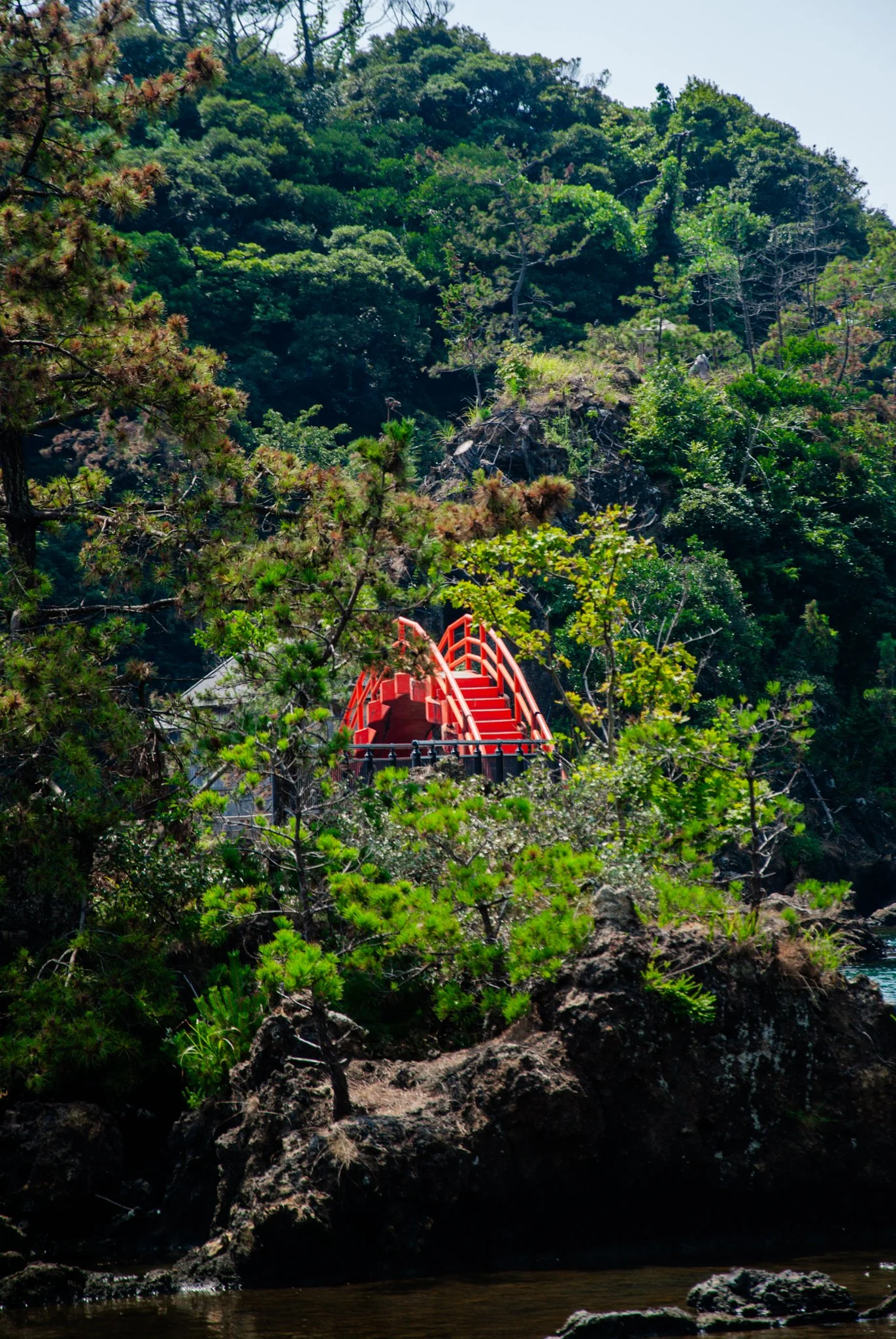
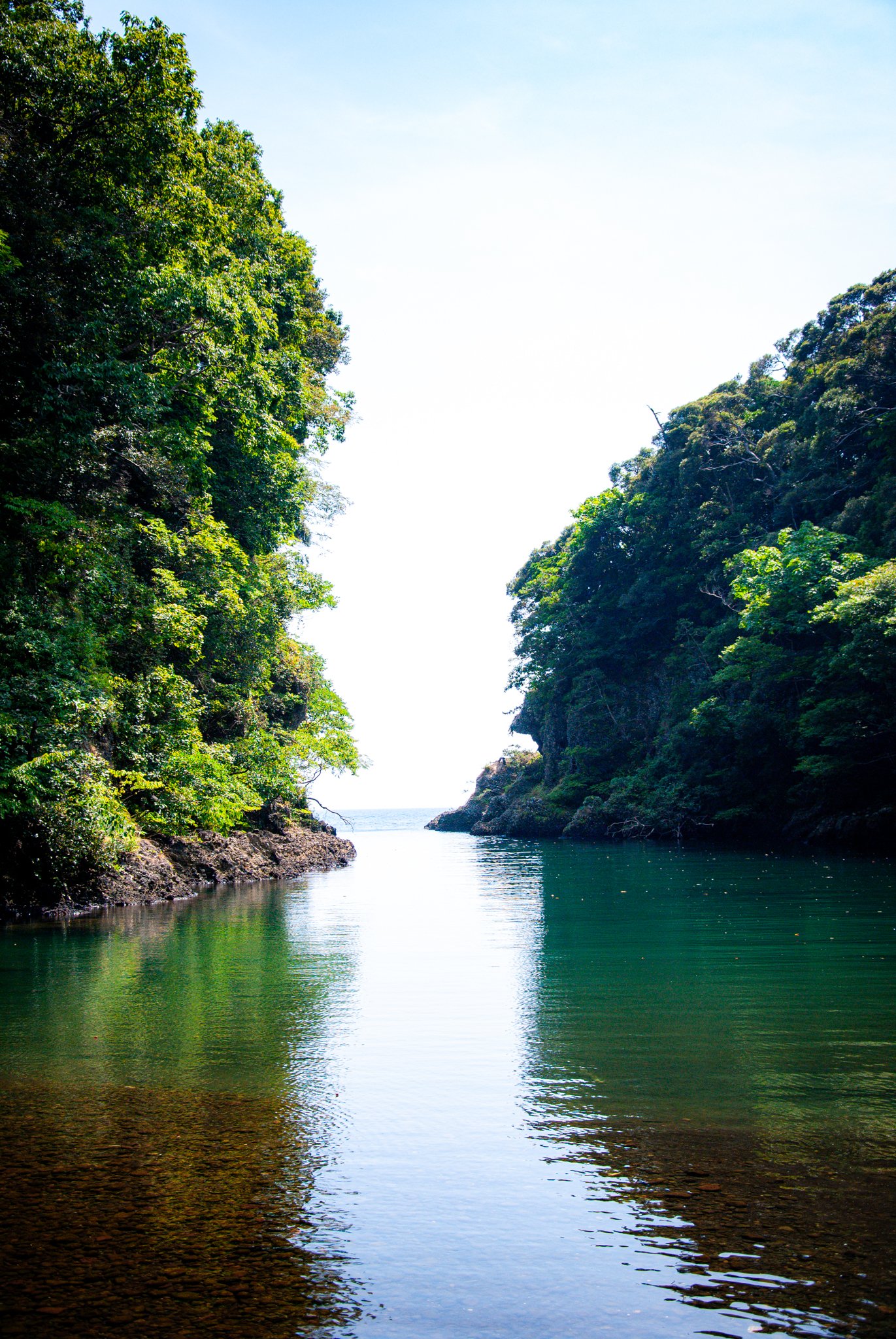
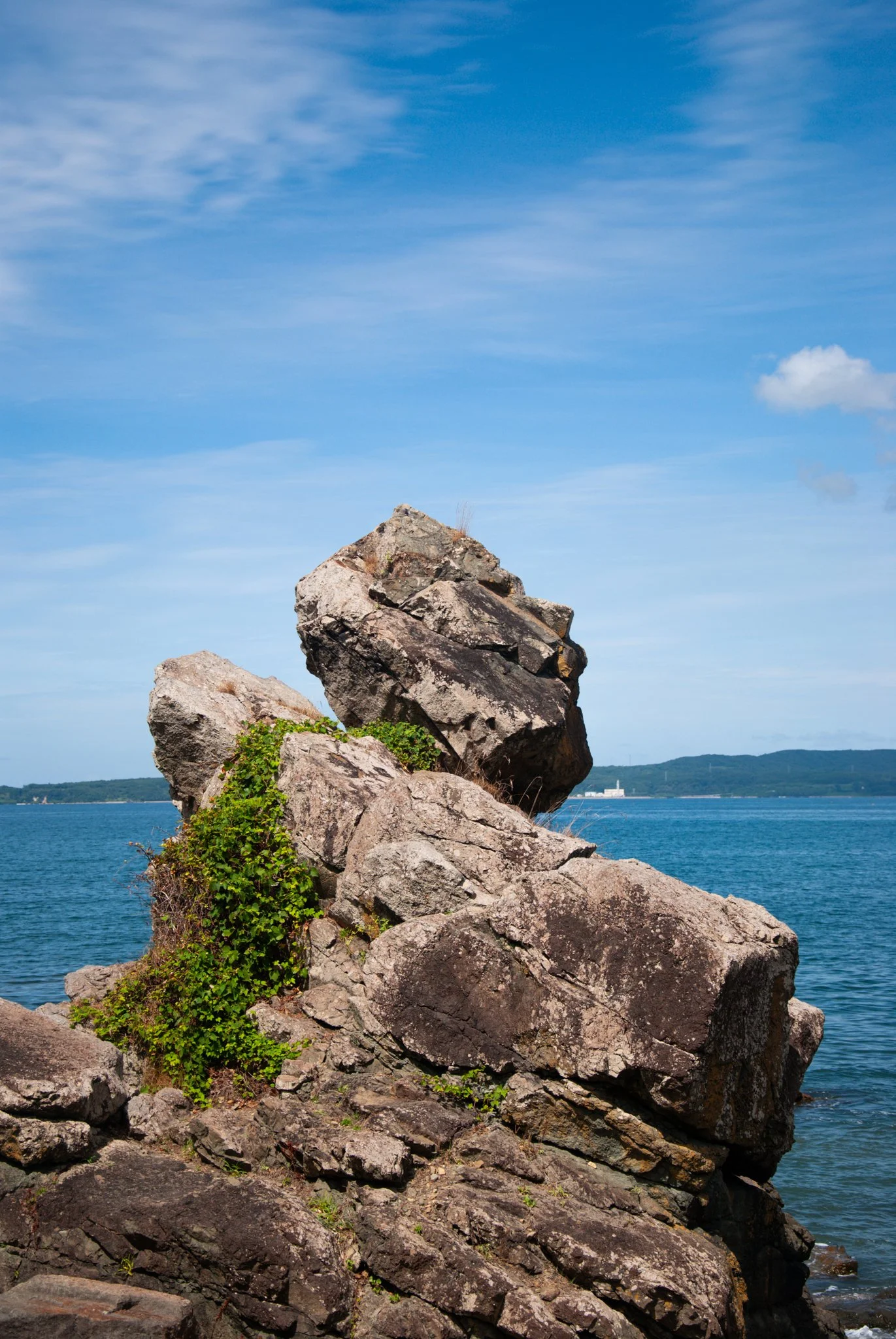
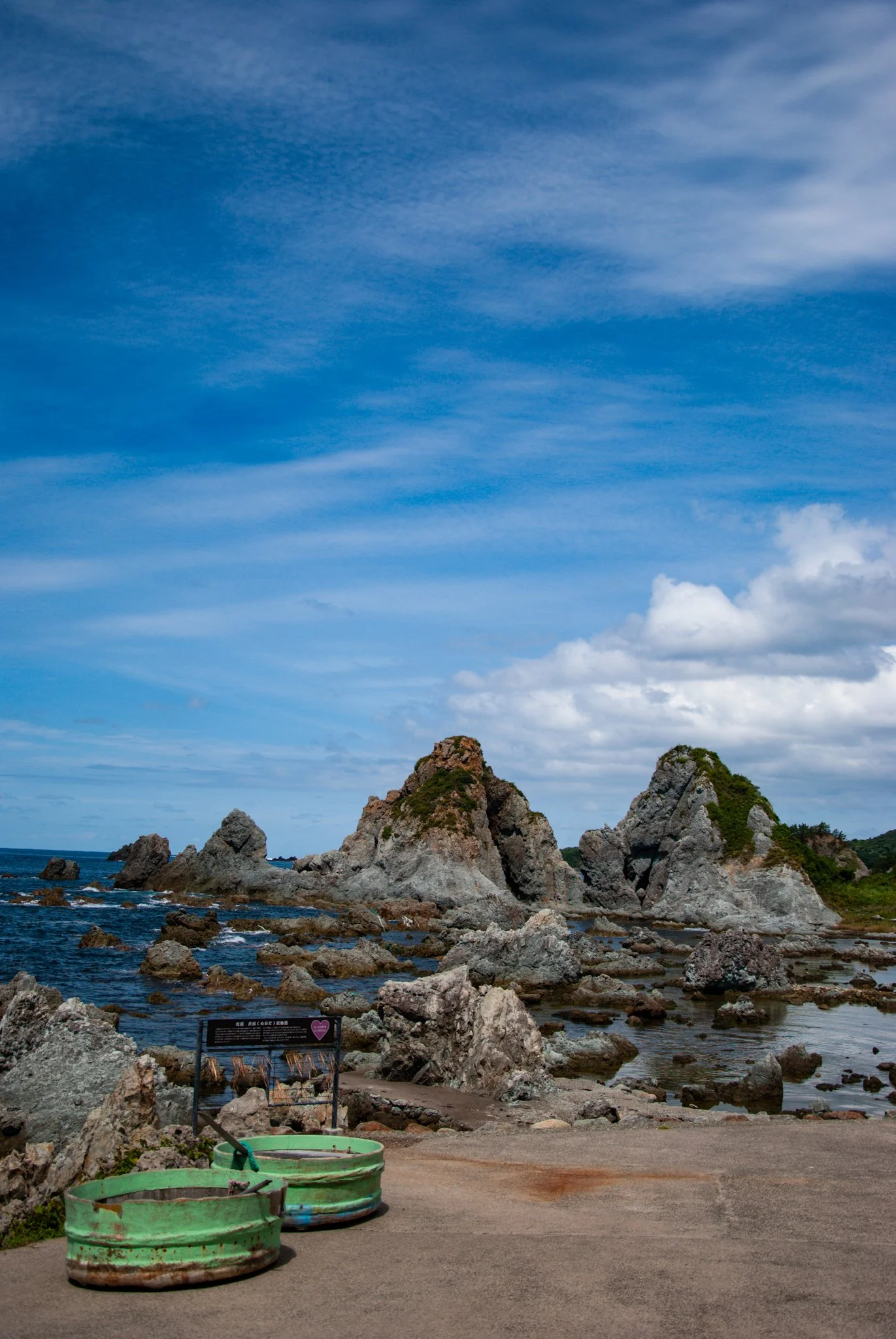
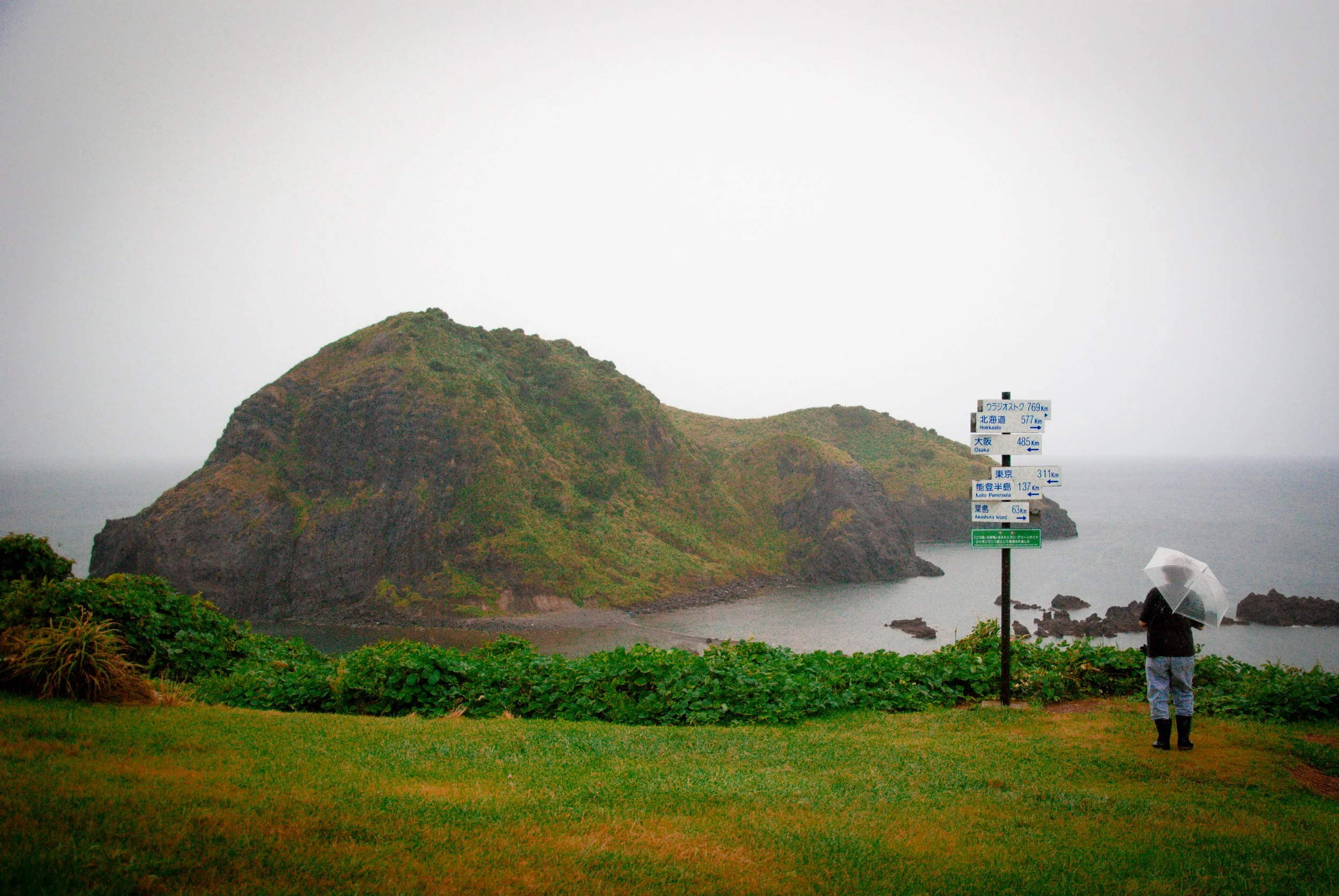
Sado’s coastline is rocky and jagged, so it’s no surprise that many of its attractions are rocks, caves, and lagoons. These include Ogi, a fishing town on southern Sado where one can view beautiful blue pools and recesses filled with vegetation; Futatsugame, a hilly island off the north coast said to resemble a pair of tortoise shells and named accordingly; and Tateiwa, a rock that my hosts and a signboard told me looks like Tanaka Kakuei, a Prime Minister from Niigata (I could barely make out a face, let alone his). Much of Sado’s coastline is incredibly steep, but occasionally the rock opens in a sort of wedge shape, creating areas where small communities are nestled into cliff faces. At least one large rock on Sado appears suspended in a slit in the stone, creating a picture-perfect view of the sun setting underneath it but also making anyone who walks under it feel a little nervous that they might be crushed.
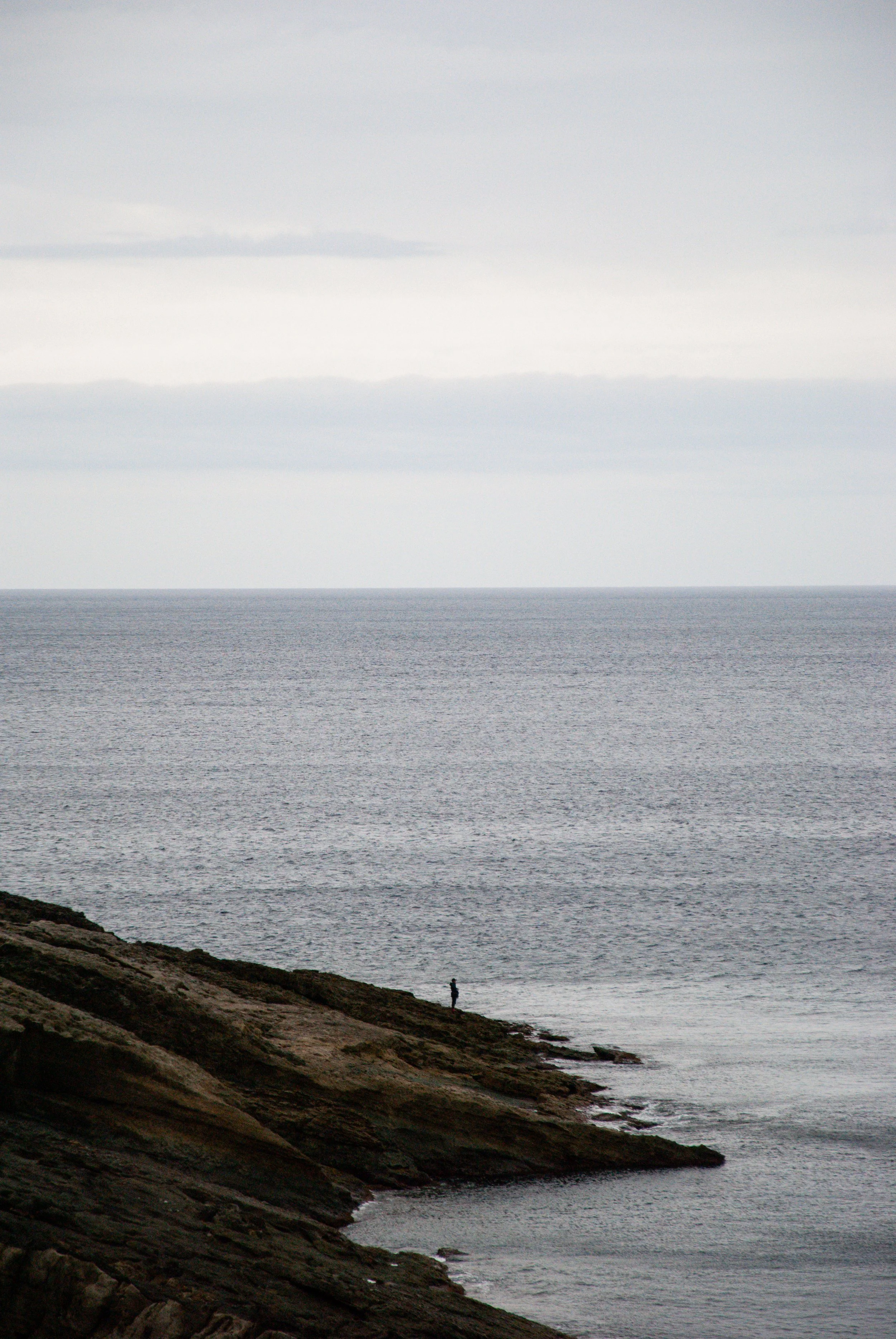
Various locations on Sado’s coast. From left to right, a bridge in Ogi; a cove in Ogi; Tateiwa; someone fishing on north Sado; Meotoiwa, close to Aikawa; and Futatsugame
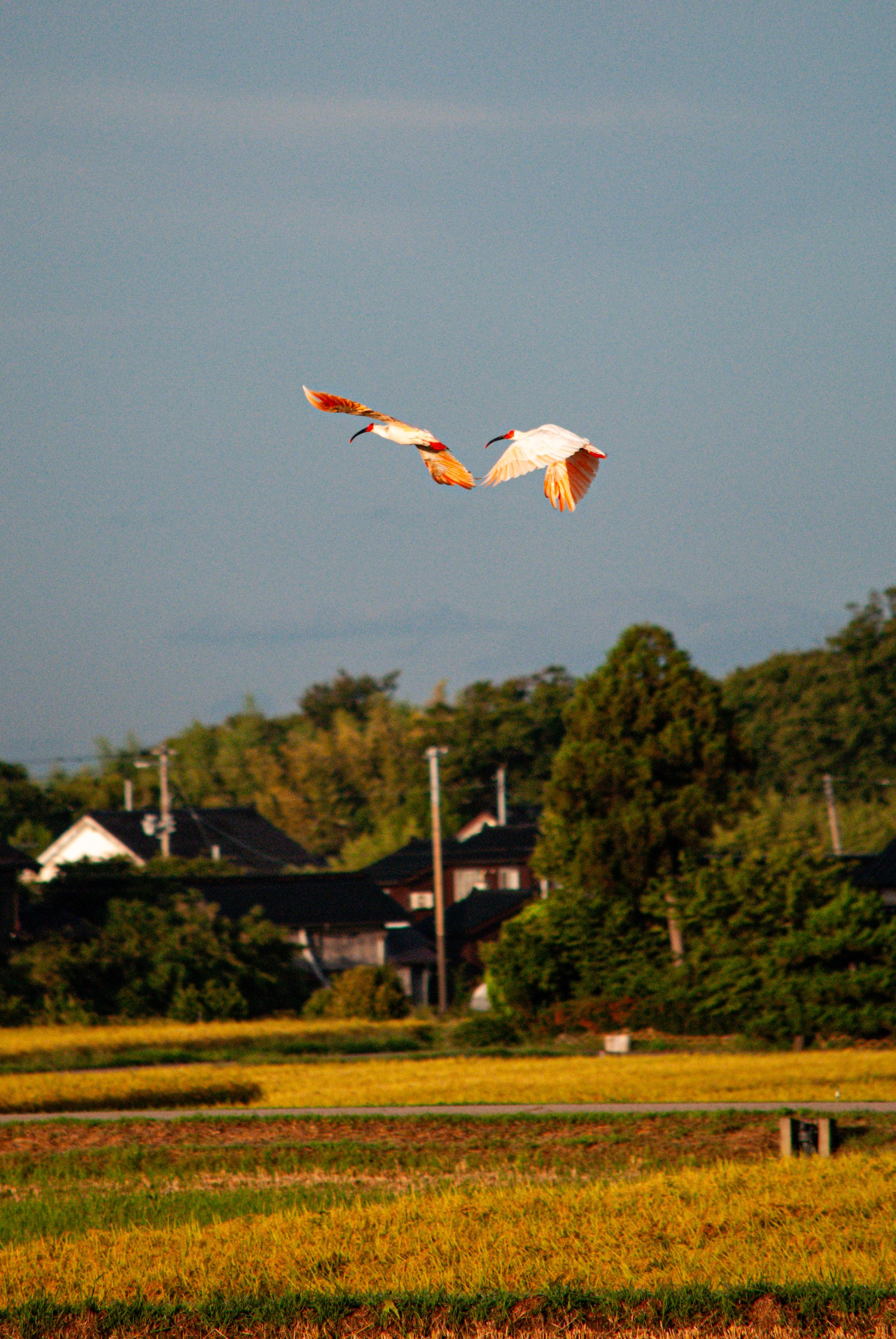
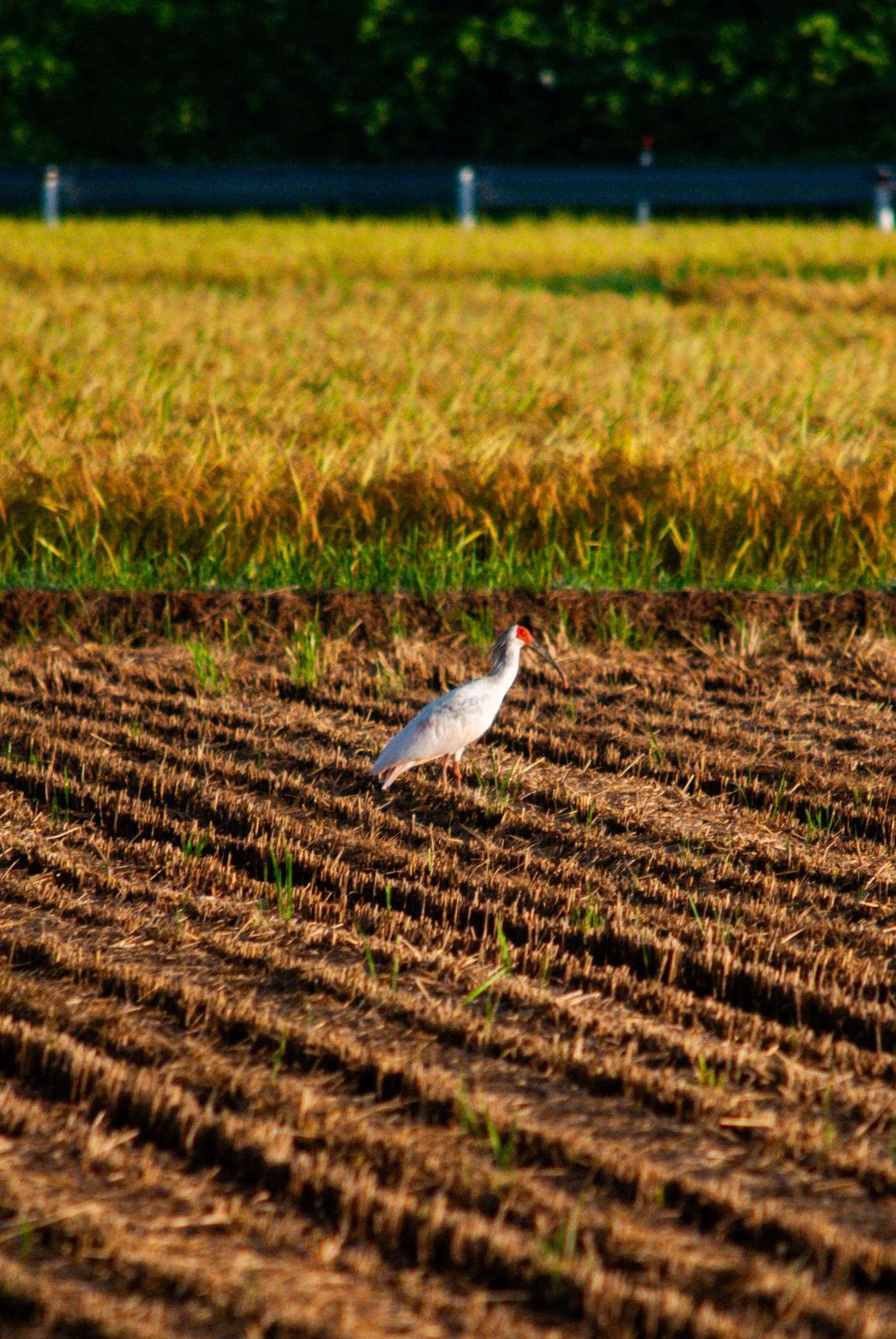
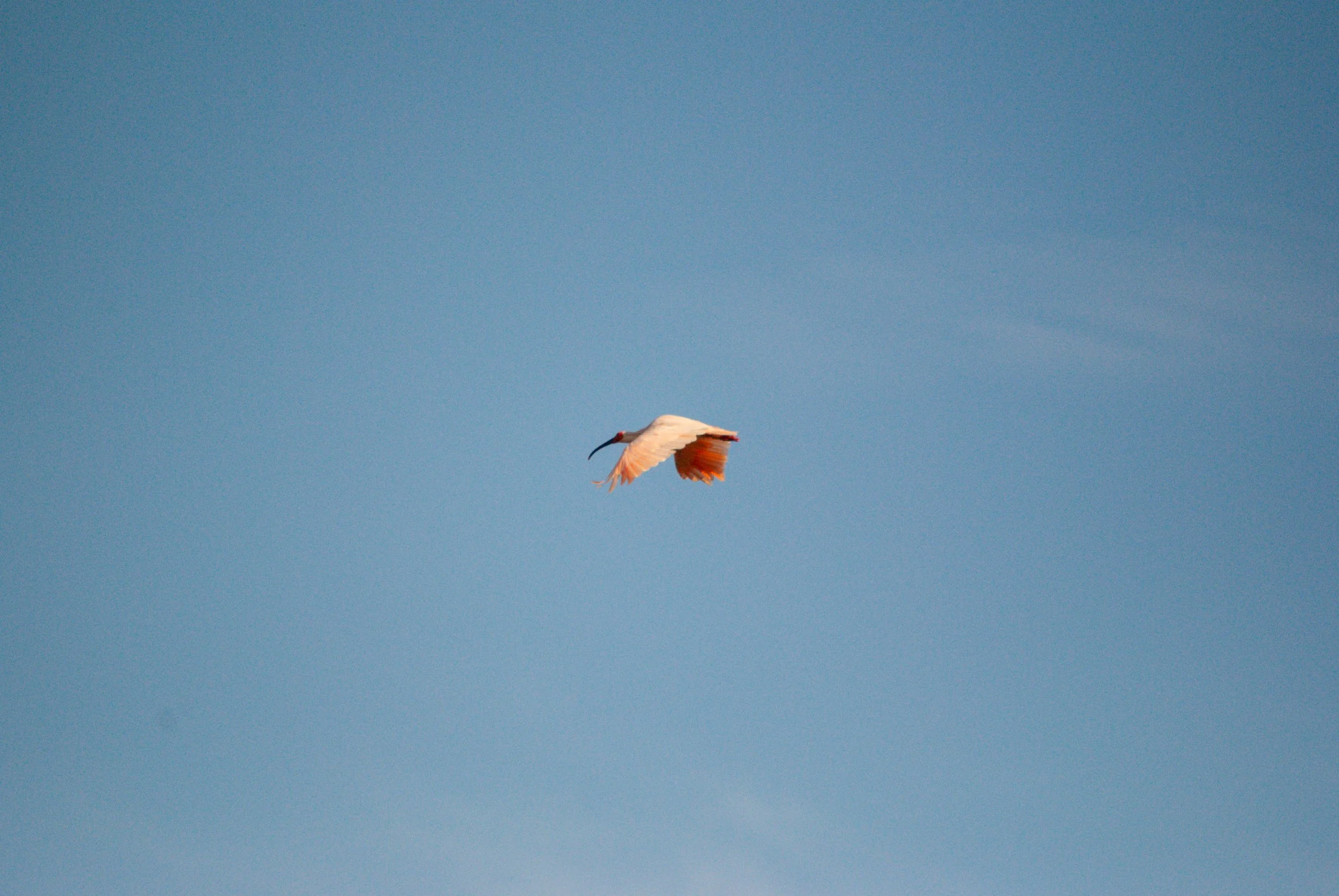
By far Sado’s most famous natural feature is the presence of the Crested Ibis, or the Toki in Japanese. The bird is usually white, though black and grey varieties exist, with a long neck, a bright red exposed face and a thin, curved beak. When the Toki flies it reveals stunning pinkish or orange feathers on the underside of its wings; young Toki have yellow feathers and a yellow face instead. I had hoped that the bird’s scientific name Nipponia Nippon had been chosen because its red face and wings against stark white feathers resemble the Japanese flag, but alas it originates with a Dutch zoologist in the 19th century who only wanted to denote the Toki as a Japanese bird. In fact, the Toki inhabited a large section of East Asia including southern China, but overhunting, pesticides, and habitat loss rendered the Toki extinct in most areas outside Shaanxi Province. This includes Japan, with the last Japanese Toki outside of captivity dying in the 1980s. After a ban on hunting Toki was lifted in the Meiji period, they had been hunted to extinction either because farmers considered them a nuisance or to sell their beautiful feathers for significant profit.
The story of the Toki’s conservation on Sado begins in the 1940s, when Takano Takaji, a farmer from what I can tell, noticed their numbers declining. While many farmers considered them pests, Takaji remembered seeing dozens of Toki turn his rice field into a brilliant shade of red in the 1930s. Once they started to disappear, he would go into the mountains with friends searching for food to give to the Toki, such as frogs and river crabs. Takaji’s grassroots efforts were valiant but came too late – by 1952, when the Toki was designated a nationally important species, just a few dozen remained on Sado. In fact, they had become so rare already that they were initially thought to have gone extinct by the Taisho Period before being found in small numbers on Sado and the Noto Peninsula.
Following the establishment of the Sado Toki Protection Association in 1953, a number of local organisations were also formed in Niibo (central Sado) and Ryotsu, and the Niigata Prefectural Government began an official program to protect the Toki. Together these organisations and their volunteers monitored nesting grounds (which were nationalised in 1962), prevented entry into Toki feeding grounds, and sought to turn Sado into the national centre for Toki conservation, even relocating the last Toki from the Noto Peninsula to Sado in 1970. Alas, by 1981 there were just a handful of Toki left on Sado, and five of these were captured and placed in captivity to prevent the species from going totally extinct and initiate a breeding program. From this point, Toki conservation shifted from trying to protect wild Toki to breeding enough for them to be reintroduced to Sado.
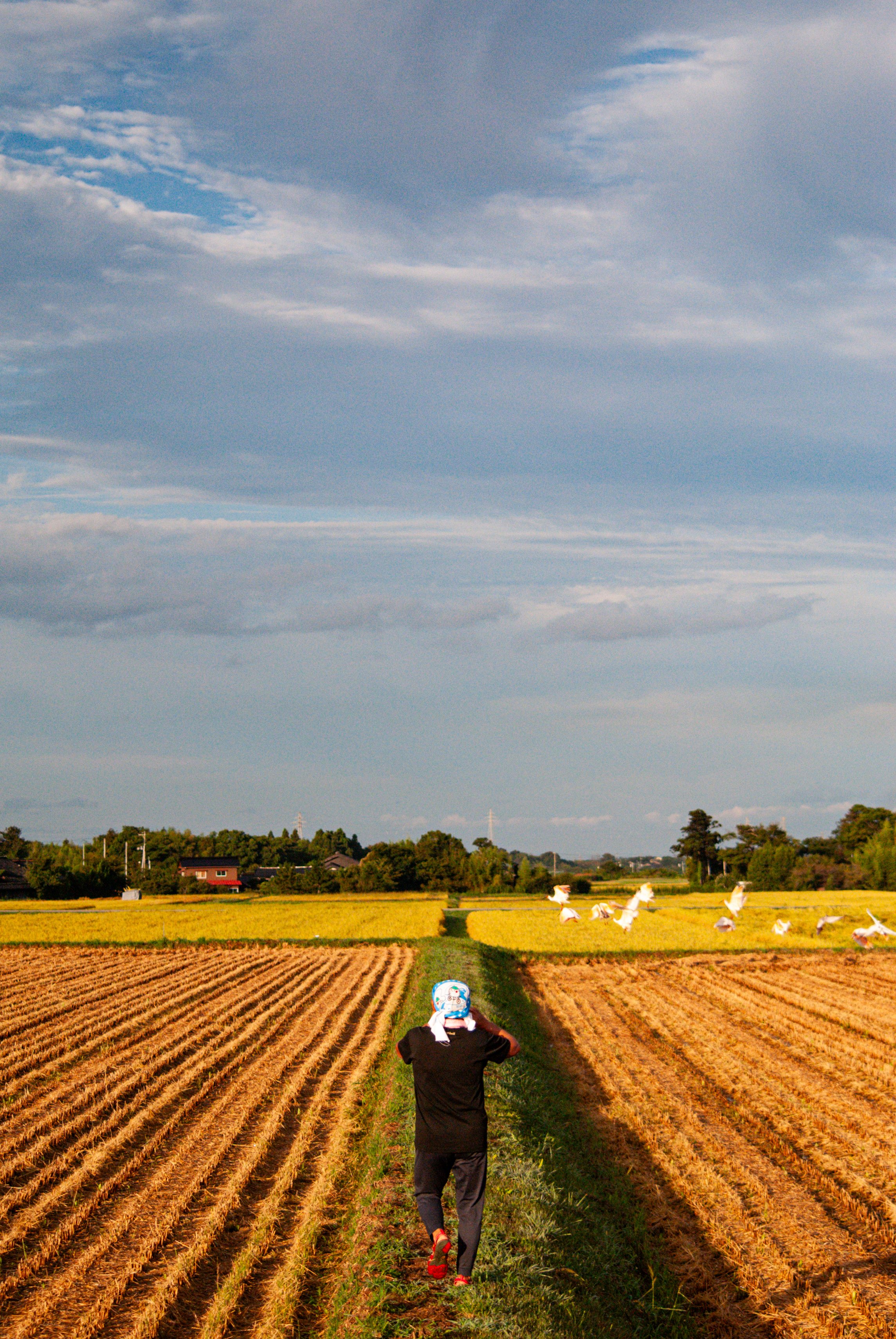
My host father’s sister Junko features in the photo below, having broken into a run to take a photo of the Toki as they flew away
Collaborators from all over East Asia were soon working together to try to save the species. Toki still existed in China and so Chinese conservationists sent birds to Japan in the hope that they would breed with the Toki kept in Japanese captivity. Meanwhile, experts at Ueno Zoo had been working on the conservation of the similar black-headed ibis, and shared their knowledge – they even sent black-headed ibises to Sado so that Toki could ‘learn from’ their breeding practices. It would take decades to see results; in 2003, a pair of Toki from China, Yu Yu and Mei Mei, laid two eggs and were placed with a black-headed ibis chick to practice raising young. A document from Sado City only states that ‘this did not lead to any success.’
The very last Japanese Toki born in the wild was caught in Mano, Niigata, in 1967. A local, Kintaro Uji, built up so much trust that she would eat from his hand, and after enlisting the help of the local board of education, Kintaro was able to catch the bird and send it to the Toki Protection Association on Sado. The bird was named Kin after her human friend, and was eventually placed with a mate from China in the hopes that she would lay eggs, with no success. Kin passed away in 2003 at age 36, over 100 in Toki years.
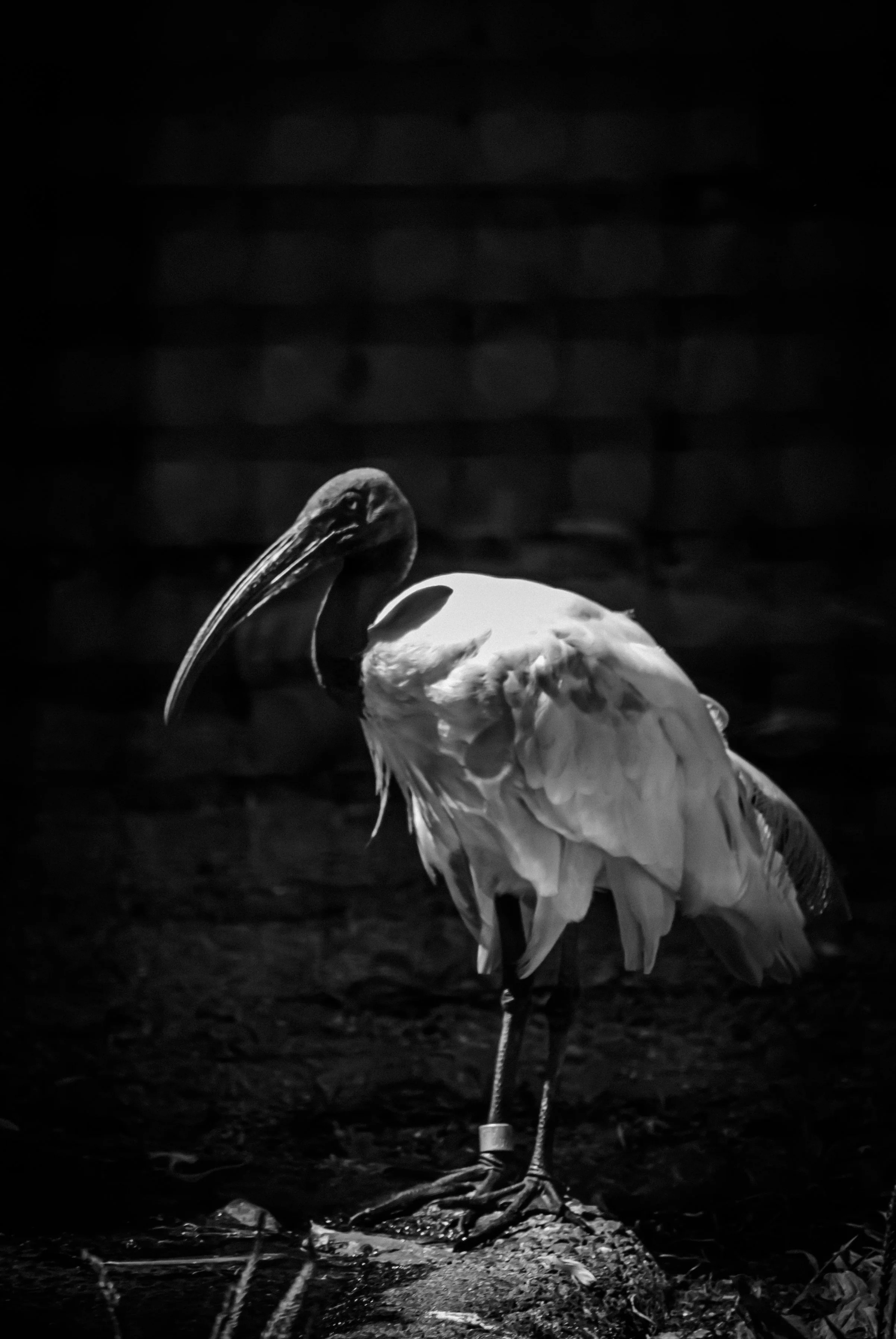
Left: a black-headed ibis in captivity on Sado
Thankfully, breeding programmes finally bore fruit in the years 2003-2007, and by 2007 the Toki Protection Association held over 100 birds. They established a reintroduction centre to train the Toki for life in the wild, and in 2008, 10 Toki were let loose on Sado, the first to live in the wild there since 1981. By this point, Takano Takaji’s son Takeshi had gone to work in Niibo to reclaim abandoned farmland and create conditions where pond snails and other creatures could proliferate, providing food for the new Toki. It’s clear that Toki conservation is multifaceted and involves the protection of other fauna on Sado to ensure that the Toki actually have a food chain to slot into.
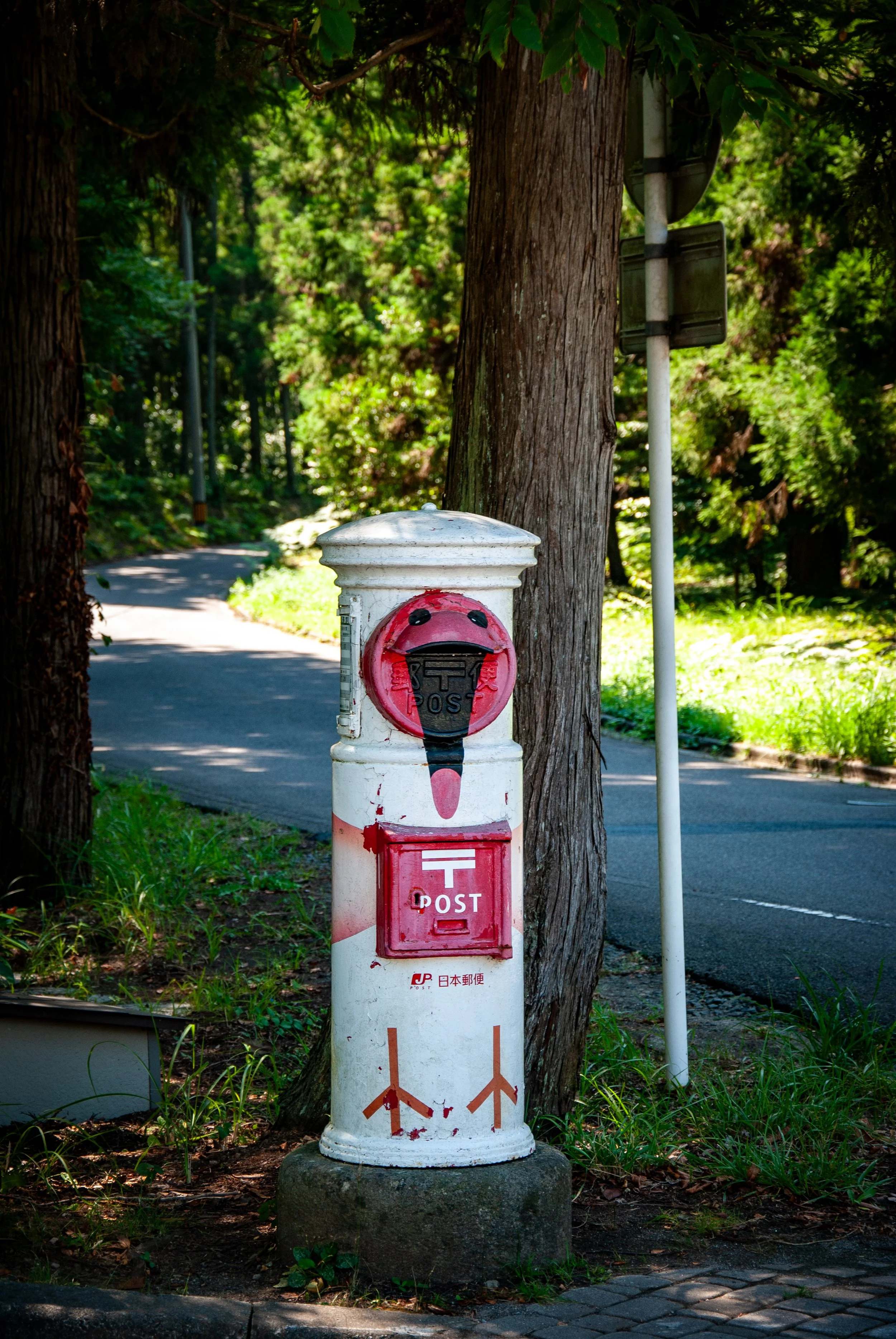
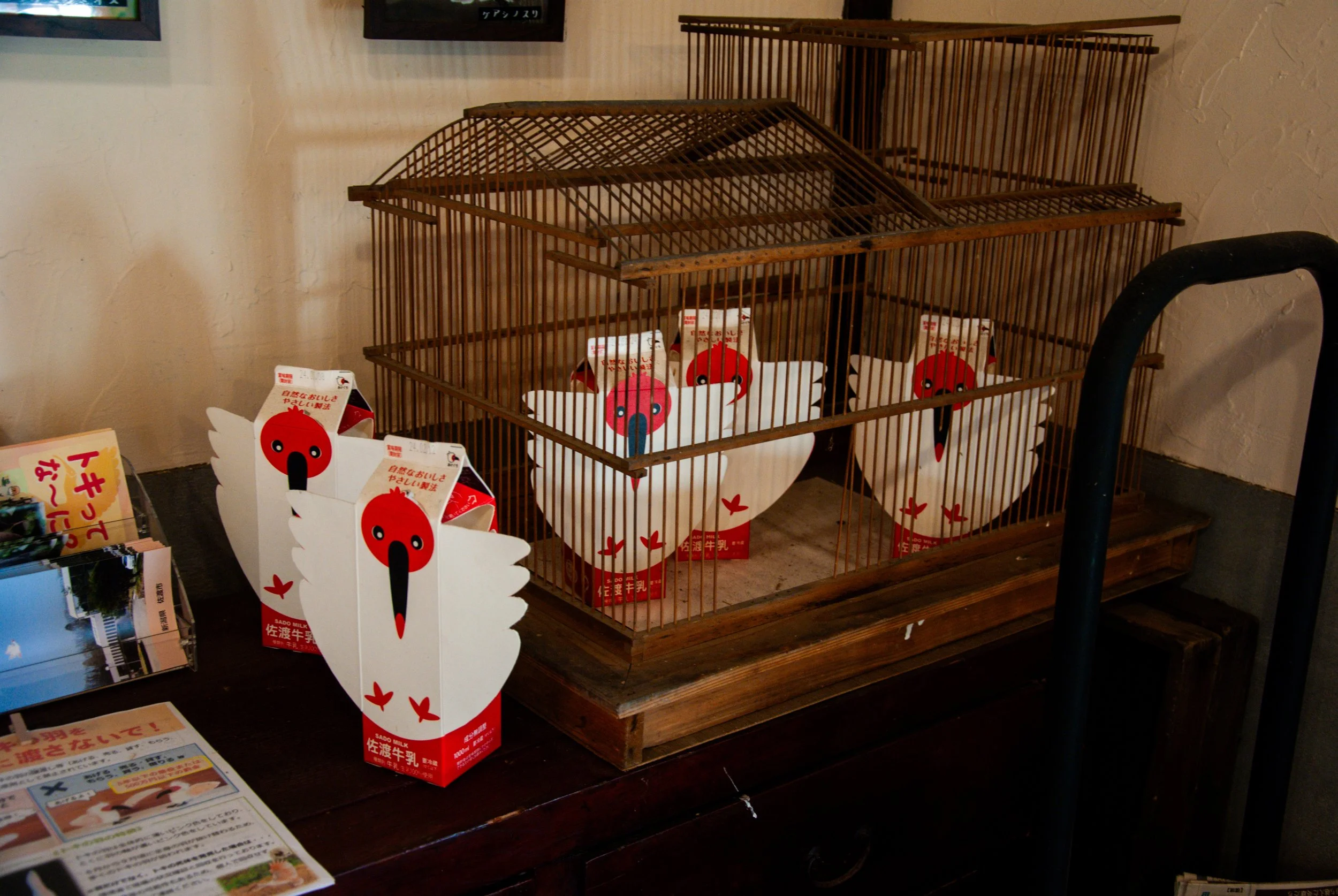
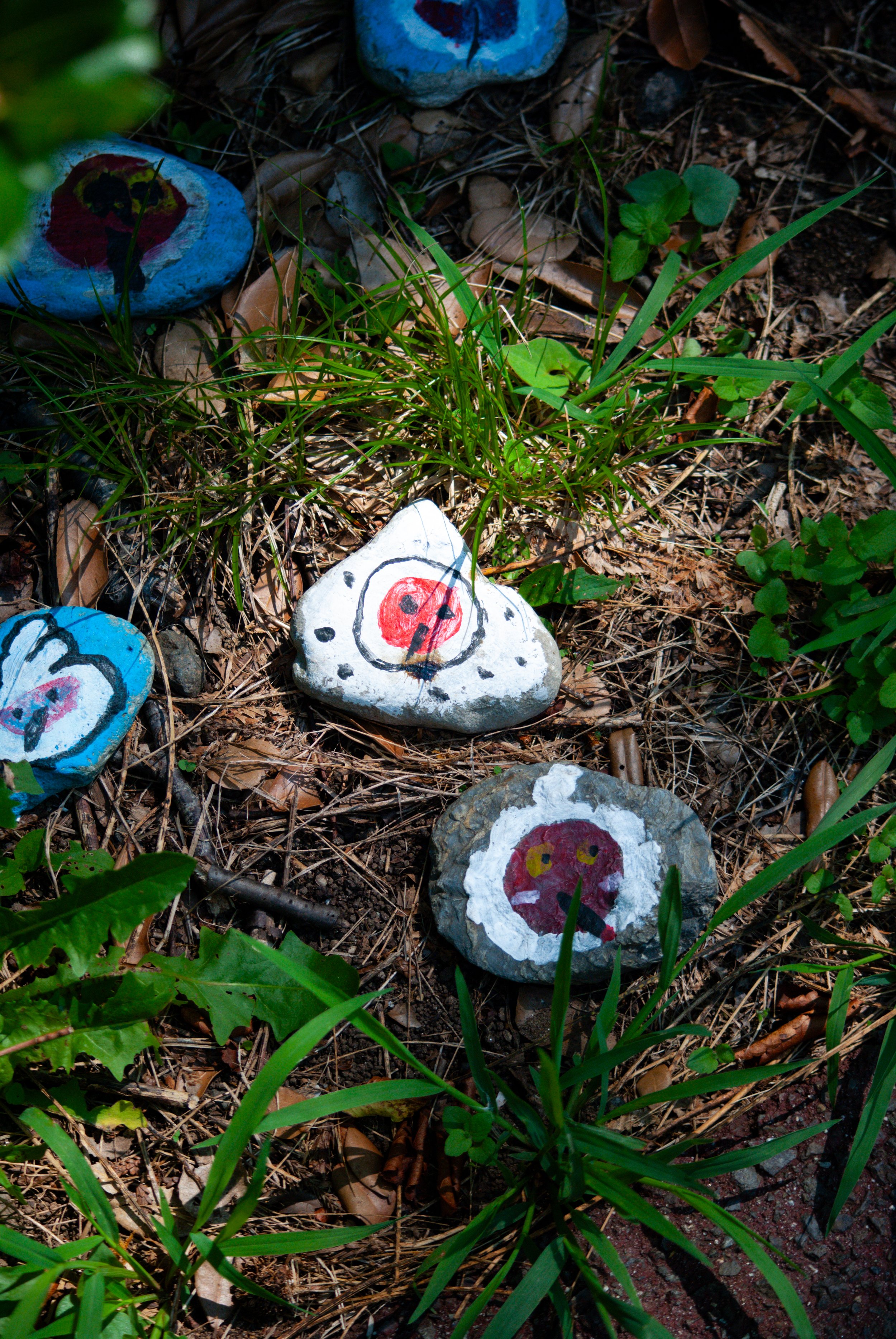
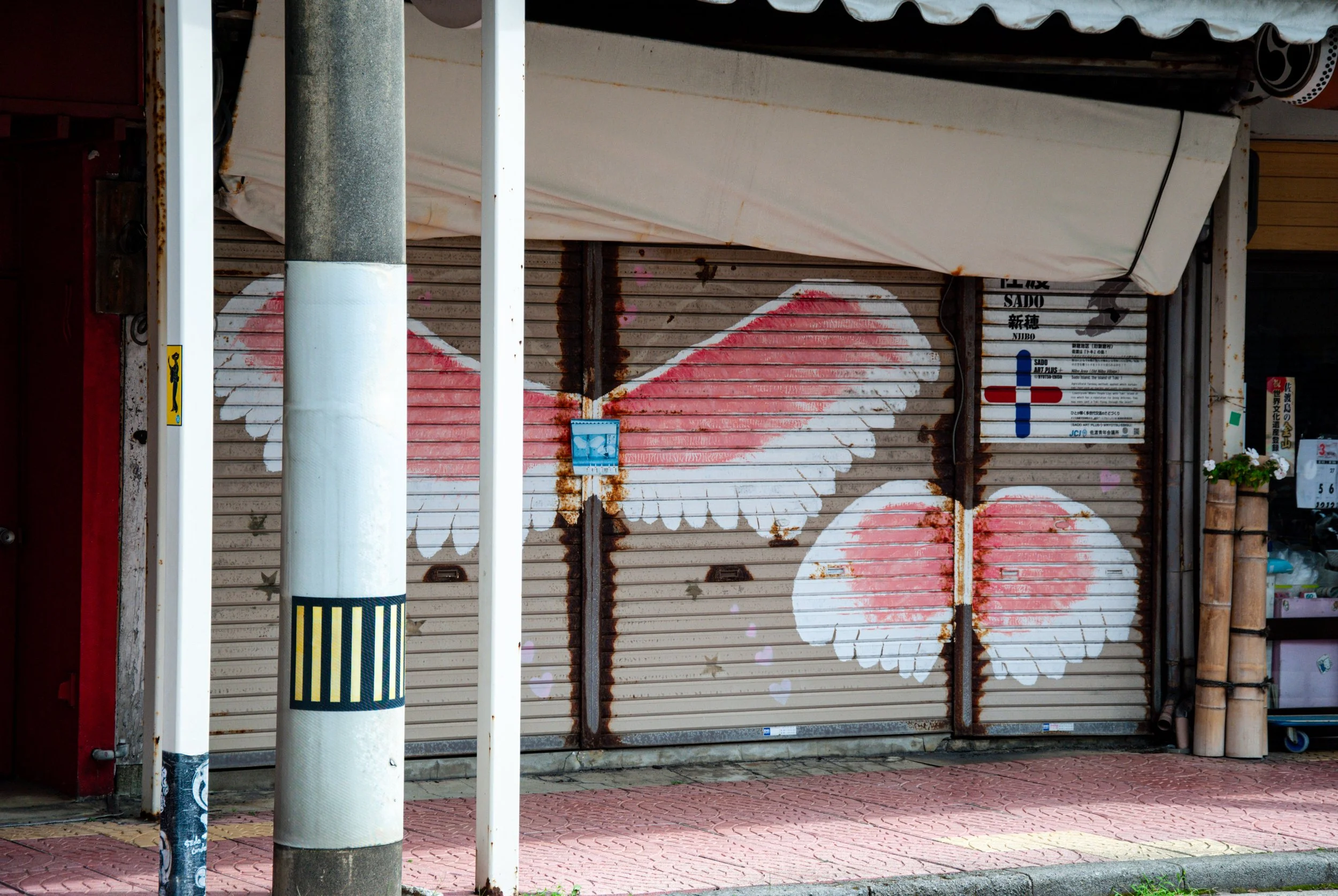
Today, Toki are recognised by the people of Sado as a beautiful and precious element of the natural landscape. Far from a nuisance, farmers describe themselves as being in a reciprocal relationship with the Toki, who fly down to eat discarded rice during the harvest and can be spotted in recently harvested fields. The Toki have become a major draw for tourism and observation areas have been established with free-to-use telescopes and guides for proper etiquette when photographing Toki (in general, you’re to stay in your car at a distance to avoid spooking them). Visitors can see Toki in captivity at the Toki Forest Park, where activities are still ongoing to breed Toki and you can even watch chicks being fed. The Toki has become so emblematic of Sado that local produce – milk, sake, sweets, and toys – feature Toki designs on their packaging, and empty milk cartons can be cut open so that the Toki’s wings spread. Ryotsu features Toki wings painted on walls and shutters everywhere.
But the Toki are also still a rare enough sight that spotting one is a special occasion for locals, too. After a few days of trying to spot Toki with no luck, my host father and his sister took me out at 5am, before the bustle of farm life had scared any of them into the mountains. Even then, we had to drive around for a while, eyes peeled, before I spied a half dozen Toki standing about contentedly in a recently harvested field. As we approached on foot they flew away, but not before I could get a few shots of their wings spread to reveal those stunning feathers. My host father is over 70 and has never left Sado and his sister has returned to the island multiple times a year for decades, but even still, neither of them have had more than a few chances to see the Toki and they were delighted. That I could as well was the most incredible luck, and for anyone who wants to spot a Toki, there’s no better time than around August/September, when the rice harvest brings them down from the mountains and they can be seen, if you’re lucky, wandering on foot in search of rice.
In large part through the Toki conservation saga, the people of Sado have developed an identity as an island that lives in harmony with nature. People are very conscious of how their farming practices may affect wildlife, and careful to only take what they need when picking edible wild plants to allow regrowth. My hosts especially like myouga, or Japanese ginger, which is actually more like a very bitter onion and is indeed eaten pickled like English pickled onions or chopped up in soups. I couldn’t quite develop a taste for it. Green politics may be particularly popular on Sado, and signs from the Japanese Communist Party urging residents to oppose nuclear power can be spotted on every street corner.
Sado is, without a doubt, home to some of the most stunning nature in all of Japan. Green and gold stretch as far as one can see in the form of lush forests and farmland. It gave me a taste of rural life that, in my daily life in Tokyo, often feels very distant, and in that way, to me, coming from England’s West Country, it felt very much like home.