Interning at Meguro Museum of Art, Tokyo: A Tour of Komaba 1 Campus
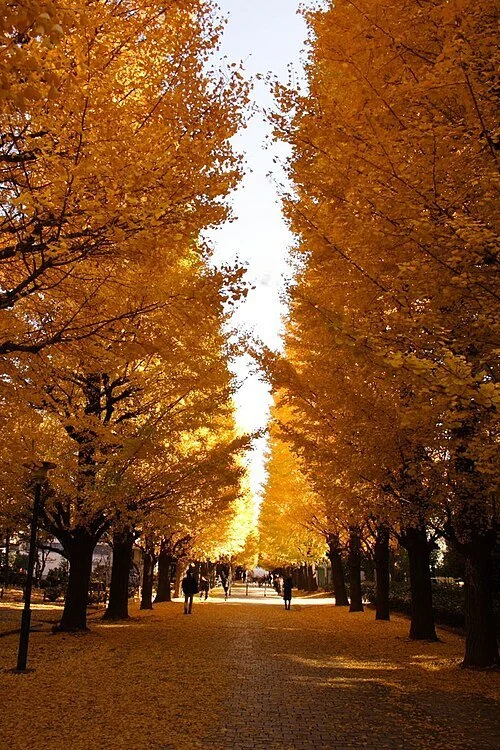
This week I had the pleasure of attending a tour of Tokyo University's Komaba 1 Campus, located in Meguro. Organized by Meguro City Office and Meguro Museum of Art, Tokyo every year, the tour is presented by Associate Professor Orimo Katsuya of the Komaba Museum and, while presented fully in Japanese, it's designed for people without a background in history, architecture, or other areas covered, and as such should be comprehensible to attendees with a working knowledge of Japanese.
While Tokyo University's Hongo Campus may be more well known, Komaba is central to its history, sitting on the site of the First Higher School at which boys once prepared for entry into Tokyo Imperial University. The school's insignia still dots Komaba Campus and the tour begins at the front gate, where a large iron logo allows our tour guide to explain the symbolism in its design and how the ethos of the First Higher School's curriculum grew into the modern day College of Arts and Sciences.
Though the tour begins with these roots, it is not linear, and only later in the tour are we introduced to the much older history of the area as a Shōgunal hunting ground. I think this is the correct choice. Rather than herding participants back and forth across campus to cover each feature in chronological order, the tour focuses on each building one by one regardless of what order they were constructed, prompting appreciation for the unique history of each rather than a timeline of the entire campus. For anyone looking for such a timeline, Assistant Professor Orimo himself has placed one outside the student co-op, complete with photos, and made it a spot on the tour. He regularly points out areas on campus that look very different from the photos on the timeline, for example where trees have since been planted. In one case, the trees have completely obscured a monument to the Komaba Agricultural School, though through efforts to preserve the historical assets of the University of Tokyo, the grounds are now well-maintained, allowing visitors to view such monuments.
Free from a chronological framework, the tour guide is able to point out interesting tidbits as and when participants pass them. These range from such dominating features as the giant, twisting trees outside the Komaba Museum, to easy-to-miss flowers along main street or the Parisian-inspired cafés at which reunion parties are held. Important figures in the university's history are introduced alongside their bronze busts or evidences of their presence, including the general Marquess Maeda Toshinari (whose residence stands nearby) and Dr Oskar Kellner, a German agriculturalist. I found the section on Kellner especially interesting because, in coming to Komaba to teach western agricultural methods while it housed the Komaba Agricultural School, he mirrored the trajectories of so many westerners at that school's northern counterpart, Sapporo Agricultural College, which played such a crucial role in the colonization of Hokkaido. Komaba still houses the Kellner Rice Fields, which are tended to by local schoolchildren.
But Komaba is ultimately kept alive by its students, and they too are given plenty of attention. The tour covers various aspects of student life and their history, including clubs, facilities, and most interestingly, the wooden signs, created by students, that line not only this university's main street but also the entranceway at Waseda University, where I studied Japanese. While Komaba appears to have been secluded from the chaos of left-wing campus occupation in the late 60s so famously experienced by other campuses, the political character of the student body was easily and humorously understood from a huge advertisement for a Marx study group and a conspicuous, bright blue caricature of a bald JD Vance.
The tour ended at Komaba Museum, where participants were invited to enjoy the current exhibition on world mapping techniques. Our tour guide was bright and cheerful throughout but seemed at his best after the tour concluded, when participants could ask him more specific questions about an area that he is clearly incredibly passionate about. I think our chat about anthropology and where to find materials on the Ainu lasted at least 30 minutes.
I won't go into further detail about the contents of the tour lest there be nothing left to learn, but I will say that it is just one of several tours that, for differing prices, go as far as taking participants into subterranean spaces under the campus and up to its highest floors. But the particular appeal of this tour, run in collaboration with staff from MMAT, is twofold. First, it costs only 300 yen. And second, it gives participants the chance to interact with people who live in Meguro and care about its history, the art museum itself being a center of culture in the area where locals' own art is consistently exhibited. If I'm not the last foreigner to volunteer for the museum, then there may even be an English-speaking staff member present to translate tricky vocabulary.
This blog won't be the last that I write about Meguro Museum of Art and what it can offer to foreigners living in Meguro, though it feels fitting that the first such blog should highlight an opportunity that focuses beyond art and demonstrats this museum's commitment to the local history of the city and its institutions.